Marafa Hell’s Kitchen isn’t merely a destination; it’s a living narrative etched into the earth, a theater where the lines between beauty, danger, and story blur. Walk its twisting gullies, and the landscape almost seems to breathe — jagged ridges and blood-red sands rise like the stage props of an ancient, unspoken play. From the sun-drenched mid-morning to the molten glow of sunset, the land performs a transformation so stark that it feels symbolic in itself: day reveals awe-inspiring grace, night casts a fiery, almost sinister aura. Here, nature is both artist and playwright, carving allegories into stone and sand, reminding every visitor that what we witness isn’t merely erosion or geography; it’s a story demanding reflection.
At the heart of Marafa lies a tapestry of symbolism that threads together consequence, transformation, and the tenuous balance between humans and the natural world. It is a place where the sacred and the threatening coexist, a canvas on which morality, time, and spirituality converge. During the day, the site’s brilliance evokes reverence; by sunset, the land’s reds deepen, the gullies sharpen, and the terrain seems almost to whisper a warning. In this, Marafa is a mirror: it reflects the human condition, the inevitable outcomes of our choices, and the slow, unrelenting power of forces far beyond our control. Its drama is not staged for spectacle — it exists because the land itself insists upon it.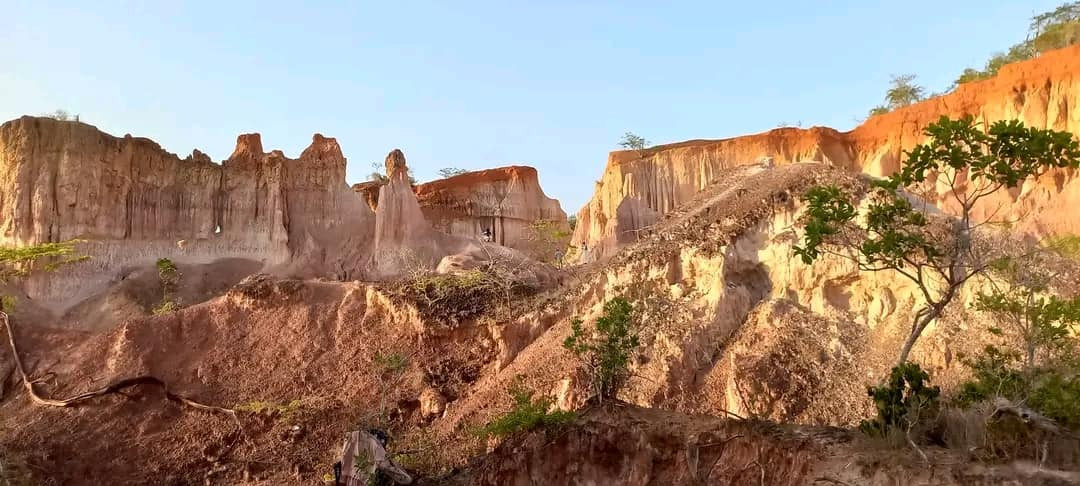
The first lens through which Marafa’s story is told is the Legend Theory, where folklore transforms the landscape into a moral epic. Local tales speak of a wealthy family whose arrogance and cruelty brought the wrath of the earth upon them. Their homestead, once a symbol of power and pride, collapsed, swallowed into the ground, leaving a stark and unforgiving wasteland. In this interpretation, Marafa becomes a living moral compass: a reminder that greed, pride, and disregard for community can invoke consequences that outlast generations. The jagged ravines and crimson sands are not merely geological—they are nature’s “receipts,” tangible records of lessons learned too late. It is punishment, warning, and storytelling carved into sandstone.
The second lens, the Geographical Theory, strips away myth to reveal the patient artistry of nature itself. Scientists argue that Marafa’s dramatic gullies and color layers are the results of eons of wind, water, and sun sculpting soft sandstone, exposing a kaleidoscope of minerals that range from pale ivory to deep, fiery red. Here, symbolism shifts from morality to time and perseverance: the land reminds us that transformation is slow, relentless, and indifferent to human ambition. No curses, no spirits — just nature performing its quiet, ancient work, teaching humility to those who stand in its trenches. In this reading, the landscape is less a warning than a meditation: a lesson in patience, permanence, and the fleeting imprint of human life against the geologic clock.
The third lens, the Ritual Theory, layers in mysticism and spiritual resonance, casting Marafa as a liminal threshold where the seen and unseen worlds intersect. Some believe the trenches and echoing gorges were once the stage for rituals — sacrifices, cleansing ceremonies, or rites connecting mortals to spirits. The heat, shadows, and labyrinthine paths intensify this sense of the otherworldly, creating a terrain that is less “hell” and more a crucible for transformation and purification. Here, symbolism evolves again: Marafa becomes a sacred space, a place of passage, where the visitor is confronted not only with the raw power of the earth but with the metaphysical questions it inspires. It challenges belief, urging reverence and reflection.
Viewed together, these three theories — legend, geography, and ritual — do not compete; they converse. Marafa Hell’s Kitchen is simultaneously a cautionary tale, a geological marvel, and a spiritual theater. Its lessons are multifaceted: respect the natural world, recognize the impermanence of human pride, and open yourself to the mysteries beyond sight. The fissures and gorges are physical, but they also echo ethical, temporal, and metaphysical dimensions, creating a site that demands more than observation; it demands contemplation. Each step through the sand is a dialogue with history, science, myth, and belief.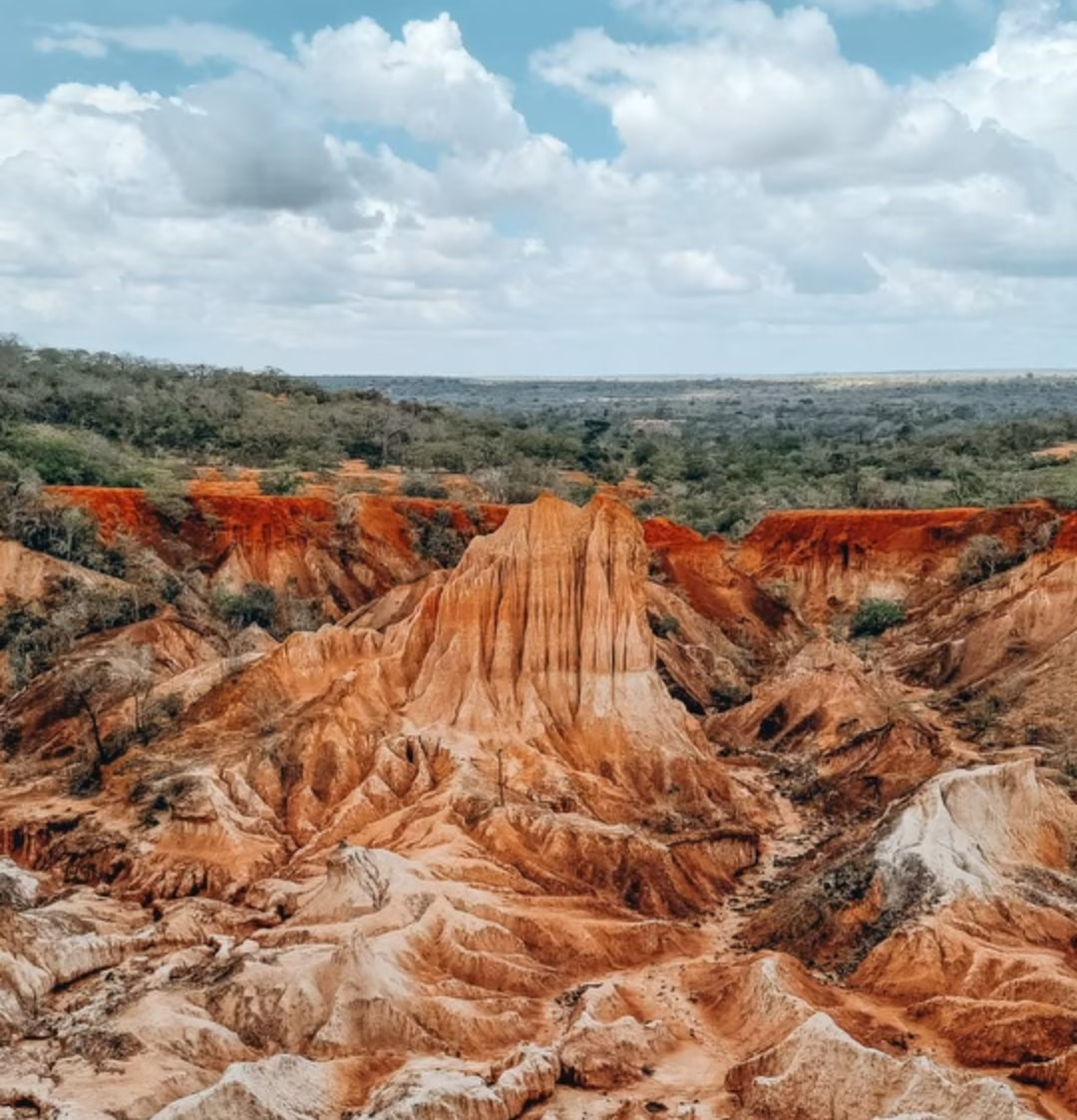
Summarily, Marafa Hell’s Kitchen cannot be fully captured in photographs or bullet-pointed lists. It is felt, remembered, and returned to in thought long after the dust settles on a visitor’s shoes. The reds, the angles, the shifting shadows — they linger in the mind like a story half-remembered, urging reflection on morality, resilience, and wonder. To experience Marafa is to confront the intersection of human imagination and the earth’s ancient processes, and to leave with the quiet understanding that beauty and peril often share the same terrain, and that the most profound stories are written in stone and sand. It is not just a place to see — it is a place to be absorbed by.